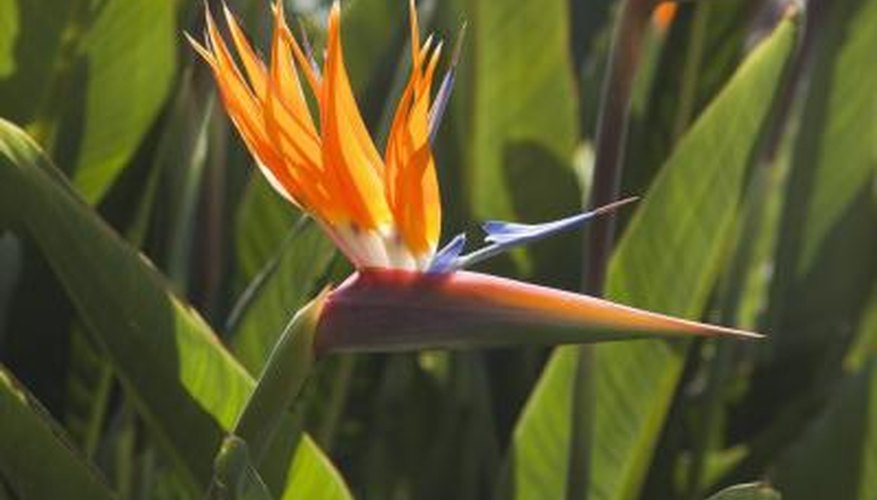
Bird of paradise is naturally pollinated by nectar-seeking birds. The birds land on the green bract and dip their beaks into the centre of the flowers. While they eat, the birds touch pollen in the stamen and deposit it when they land on another flower, fertilising it. However, if you keep birds of paradise inside, you can't rely on nature to take its course. You can do it manually, for similar results.
- Bird of paradise is naturally pollinated by nectar-seeking birds.
- While they eat, the birds touch pollen in the stamen and deposit it when they land on another flower, fertilising it.
Hand-pollinate bird of paradise flowers early in the day. This is the best time because there is a lot of pollen present on the flowers. During the day, the pollen dries or flakes off.
Get two bird of paradise flowers. The plants are not naturally incestuous, meaning you have to get pollen from a different specimen for successful pollination. Make sure the plants did not originate from the same rhizome.
- Get two bird of paradise flowers.
- The plants are not naturally incestuous, meaning you have to get pollen from a different specimen for successful pollination.
Look for the male and female flowers. The male flowers have a stamen which contains pollen, while the female flowers have a stigma, which receives the pollen. Pollen can have many colours including dark yellow, light yellow or white.
Put your finger on the end of the male flower's stamen. If pollen transfers from the flower to your finger, the stamen is ready for pollination.
Rub a cotton swab, your finger, or an artist's brush to the anthers. Pollen should stick to the swab.
Brush the swab onto the female flower's stigma. It is sticky and should adhere quickly. The pollen will germinate and develop a tube down the interior of the style to the flower's ovary. The pollen grain will then fertilise an ovule, creating seeds to end the process.
- Rub a cotton swab, your finger, or an artist's brush to the anthers.
- The pollen will germinate and develop a tube down the interior of the style to the flower's ovary.
Repeat the pollination process until you have done as many as desired.