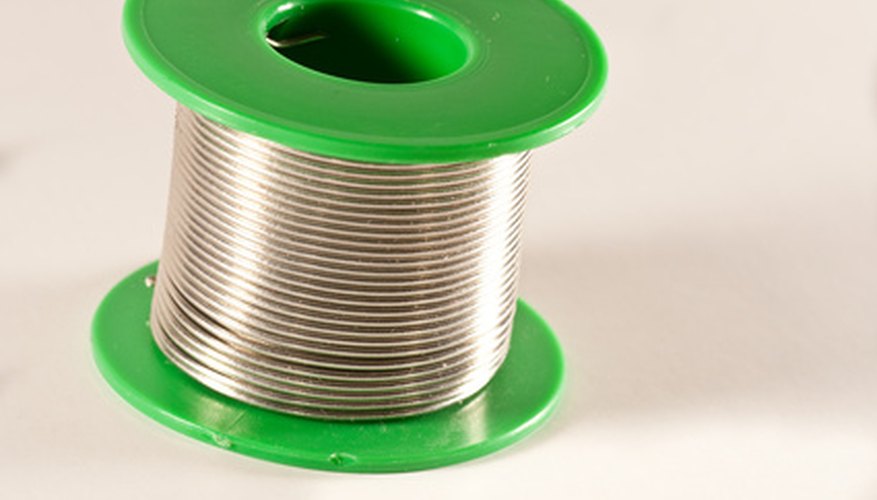
Soldering, a process of bonding metal used in many metalworking or jewellery making projects, is commonly used on all different types of metal. While the most common metals soldered are gold, silver and copper, you also can solder nickel silver. Nickel silver is not actually silver; instead, it is a nickel, zinc and copper alloy that is used to mimic sterling silver. However, it is soldered the same way as sterling silver and other metals.
- Soldering, a process of bonding metal used in many metalworking or jewellery making projects, is commonly used on all different types of metal.
- However, it is soldered the same way as sterling silver and other metals.
Prepare a work station for soldering. Set a large ceramic tile on your work table, and lay a few fire bricks on top of it, to create a fireproof surface. Assemble your other equipment nearby.
Lay your nickel silver piece on top of your fireproof surface. Paint a small amount of flux onto the metal edges you wish to solder together. Press those edges together, using the soldering clamps if necessary.
Cut a few small pieces of silver solder with the wire clippers, and place them onto the "seam" created by your flux edges, using the tweezers.
- Lay your nickel silver piece on top of your fireproof surface.
- Cut a few small pieces of silver solder with the wire clippers, and place them onto the "seam" created by your flux edges, using the tweezers.
Turn the soldering torch to a small flame, and move it over the nickel silver piece in a steady motion, heating up the metal evenly. Pull the torch away when the solder melts and runs along the flux edges.
Pick up the soldered nickel silver piece with the copper tongs, and place the piece into the pickle pot to remove the oxidation. Remove the piece from the pickle pot.
File and sand down any excess solder from the surface of the piece, so that the solder blends in with the rest of the metal. Lightly sand the entire surface of the piece to remove any remaining oxidation.
Polish the nickel silver with a polishing cloth.
TIP
You may want to use a pickeling solution that is specifically made for nickel, such as Nickel-Pickle. Place this solution in a heated pickle pot.