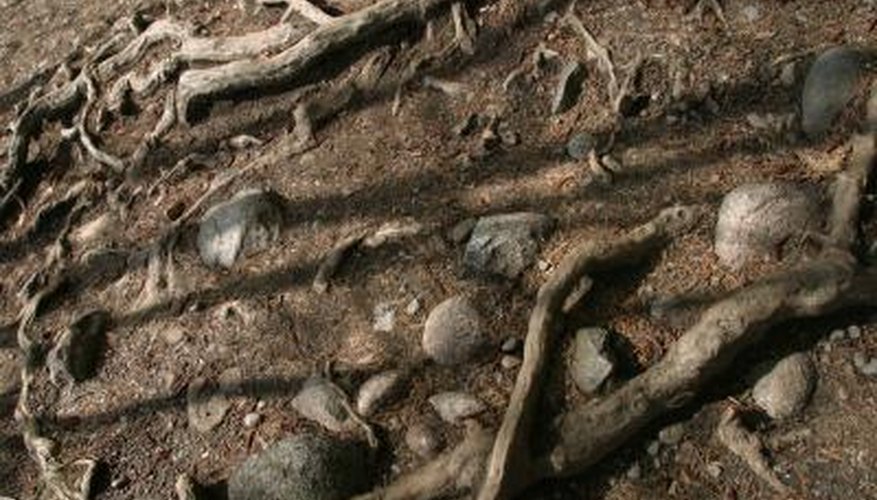
Weathering refers to the breakdown of rocks and soils due to the effects of weather and other chemical and biological processes. Erosion refers to the movement of the broken-down material from one site to another. While these processes often go on with no ill effect on humans, they can cause severe environmental problems.
Soil Erosion
Soil erosion is a significant problem for farmers and consumers alike. Erosion is a natural process and occurs, to some extent, without the influence of human activity. However, deforestation and practices associated with overfarming remove the components of the soil that help to bind it together and the structures that protect it from the forces of the elements. When this happens, wind and rain can act to draw the nutrient-rich topsoil off the farmland, often depositing it in water courses. This can destroy the productivity of the land and damage the rivers and lakes where the topsoil ends up.
- Soil erosion is a significant problem for farmers and consumers alike.
- However, deforestation and practices associated with overfarming remove the components of the soil that help to bind it together and the structures that protect it from the forces of the elements.
Sea Cliff Erosion
The powerful impact of waves is constantly eroding sea cliffs. Little by little, this undermines the base of the cliff, causing collapses. Over time this causes the coastline to recede inland. For people with property near the cliff this can mean the loss of a valuable financial asset or a treasured home. Roads, farmland and natural ecosystems at the cliff edge will suffer the same fate.
- The powerful impact of waves is constantly eroding sea cliffs.
- Little by little, this undermines the base of the cliff, causing collapses.
Landslides and Related Disasters
As well as loss of land above sea cliffs, erosion on cliffs and slopes can also cause deaths and damage to property at the foot of erosion site. Aside from people or property buried or otherwise damaged by the flow of soil, mud and debris, sudden deposition of large volumes of rock and soil into water can cause tsunamis. Indeed the largest type of tsunamis, so-called megatsunamis, such as that which occurred near Vajont Dam in Italy in 1963, are caused not by underwater earthquakes, as is usually the case with tsunamis, but by masses of rock and earth dropping suddenly into the water.
Silting
Erosion causes fine mud known as silt to be washed off the land and into water courses, which carry it downstream. In the past this erosion was a valued means of improving the fertility of farmland. Most famously, the ancient Egyptians farmed on the banks of the Nile after yearly flooding had deposited nutrient rich silt over the ground. With the building of modern facilities, silting represents a problem to harbours and lakes formed by the damming of rivers. The water courses become filled with silt and become inoperable. The lake behind Aswan dam which now cuts across the Nile is rapidly filling with silt, lowering its capacity and thus its usefulness as a source of water and hydroelectric power.
- Erosion causes fine mud known as silt to be washed off the land and into water courses, which carry it downstream.
- With the building of modern facilities, silting represents a problem to harbours and lakes formed by the damming of rivers.